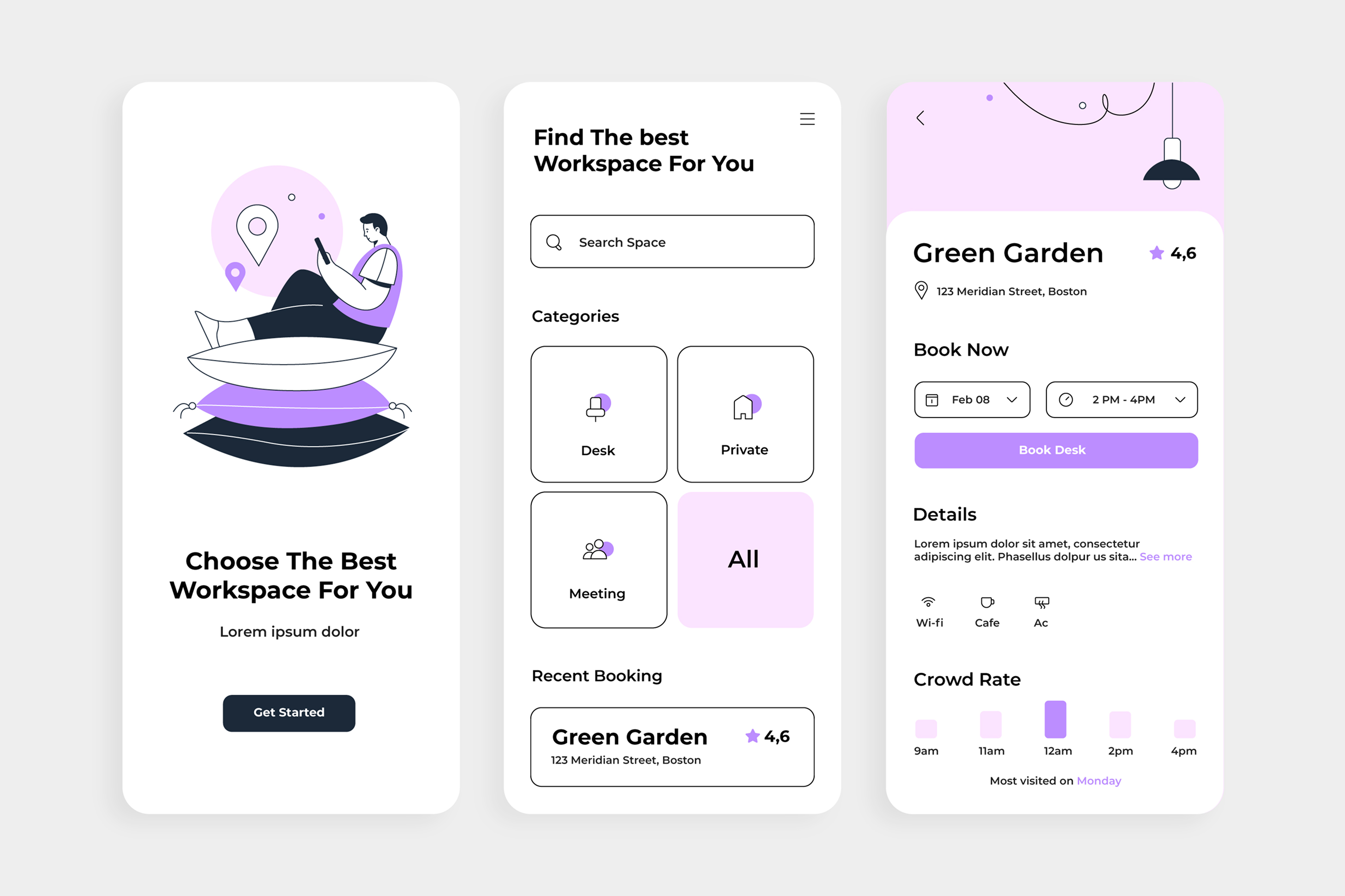

Inclusive patterns benefit all users, not just those with disabilities.
There's a persistent narrative in design circles that accessibility is a constraint. A set of rules that limit creative possibility, a checklist that gets in the way of building something beautiful. That treating accessibility as a core principle means compromising on aesthetics, speed, or functionality.
I'd argue the opposite is true. Accessible design isn't a compromise on design quality; it's the practice of thinking clearly about how people actually use things. And the more rigorous you are about that thinking, the better the product becomes for everyone.
The moment you stop designing for an imagined "average user" and start designing for the full spectrum of human variation (how people perceive, how they move through interfaces, the contexts they use your product in), your design improves fundamentally. Not just for people with disabilities. For everyone.
The invisible disabilities are everywhere
When we talk about accessibility, the common mental model is wheelchairs and screen readers. Mobility aids and vision loss. These are real and important, but they're only a fraction of what accessibility actually covers.
Consider someone with dyslexia trying to read a paragraph set in a decorative serif font with low contrast. Or someone with motor control differences trying to click a button that's only 20 pixels wide. Or someone with colour blindness trying to understand a chart where the only distinction between data points is red versus green. Or someone with cognitive load issues (tired, stressed, distracted) trying to navigate a form where every field is optional and the instructions are unclear.
These aren't rare edge cases. They're common human states. And designing with them in mind doesn't create a special "accessible version" of your product. It creates a better base product that works better for everyone.
I worked on an e-commerce checkout flow where we added explicit error messages instead of just red highlights. "You're missing your apartment number" instead of a red border. The change was motivated by accessibility (helping people who rely on screen readers or who can't perceive colour). But the result was that all users made fewer mistakes. The checkout completion rate went up across the board.
That's not an accessibility tax. That's better design.
The cognitive accessibility that nobody talks about
Here's where I think most products fail most dramatically: cognitive accessibility.
This is the discipline of making a product easy to understand, easy to navigate, easy to remember. Clear language instead of jargon. Logical sequencing instead of arbitrary structure. Persistent context so you don't have to hold information in working memory.
These are accessibility features. They're also the foundation of good UX. But products routinely fail at this in favour of novelty or visual complexity.
I watched a design team build a beautifully innovative navigation pattern. It was visually distinctive, technically clever, and completely non obvious how to use it. New users would spend minutes trying to figure out where to find things. The team defended it as "users will learn." But the cost of that learning curve (the friction, the confusion, the support burden) far outweighed the aesthetic innovation.
A simpler, more conventional navigation pattern would have been more accessible. It would have also been better for the product. Users need to understand how to find things, not spend cognitive resources figuring out the navigation paradigm.
Colour contrast teaches you something about hierarchy
Let's talk about something concrete: colour contrast.
If you're building an interface where the only way to distinguish between states is through colour ("red means error, green means success"), you've designed something that doesn't work for people with colour blindness. You've also designed something that's unclear for anyone in a bright room, anyone on an old monitor, anyone copying the interface to black and white.
The fix isn't to make a special high contrast version. It's to design with redundant information. Use colour, but also use icons. Use language. Use position. Layer the information so that removing any single channel still leaves the meaning clear.
This is better design. Not just for colour blind users, but for everyone. Your interface is clearer. Your hierarchy is stronger. Your meaning is more resilient.
The teams that treat colour contrast as a constraint they resent often end up with interfaces that are visually muddy (high contrast between similar elements, unclear hierarchy, meaning that depends on perfect conditions to perceive). The teams that treat it as a design challenge produce interfaces that are visually crisp. Intention is clear. Information is layered.
The speed argument
One of the arguments I hear is that accessibility slows things down. That adding ARIA labels, testing keyboard navigation, optimising for screen readers takes time away from shipping features.
But here's what I've observed: products that are built with accessibility in mind from the start are typically faster to build than products that ship and retrofit. Because the thinking is clearer. The architecture is simpler. The interactions are more straightforward.
A form built with accessibility in mind (clear labels, logical flow, persistent error feedback) is faster to code than a form with optional labels, non standard interactions, and reactive error states that appear on hover. Keyboard navigation built in from the start is faster than bolting it on later.
Accessibility doesn't slow you down. Retrofitting accessibility does. And the way you avoid retrofitting is to build with it as a core principle from the beginning.
What "universal design" actually means
There's a term (universal design) that sometimes gets thrown around in ways I find frustratingly vague. It can sound aspirational but impractical. How do you design for literally everyone?
The more grounded way I think about it is: design for the widest possible range of human variation without compromising functionality. Some people see perfectly; some are blind; most are somewhere in between. Some people have fine motor control; some don't; most vary depending on context and circumstances.
Rather than designing a "normal" product and then adding accessibility, you design with the full range in mind from the start. Which means:
Make meaning redundant. Don't rely on colour alone, or size alone, or position alone. Layer information so it's clear across different perceptual contexts.
Respect cognitive capacity. Don't assume unlimited attention or memory. Keep instructions clear, workflows simple, context persistent.
Build flexibility into interaction. Some people use a mouse. Some use a keyboard. Some use voice. Some use a combination. Your product should work across these input methods, not force a particular one.
Test with real people. Not just people with disabilities, but people in real contexts. Tired. Distracted. Using your product on a phone in bright sunlight. Using it while holding something else. These aren't special cases; they're normal use.
When you design with this thinking, you're not building a special accessible version. You're building a better version. One that works better for more people in more contexts.
The business case is simpler than you think
I don't think the business argument for accessibility should overshadow the moral argument. But it's worth naming: accessible products have higher retention and lower support burden.
A product that's easy to understand has lower churn. A product that clearly communicates error states has fewer frustrated users. A product that works across input methods works for more people. A product with redundant information is usable in more contexts.
These aren't special features. They're the outcomes of thinking carefully about how people use things.
The discipline is clarity
These questions make you a better designer. Not because they're rules you're forced to follow, but because they push you toward clarity and intentionality.
• Does this meaning depend on a single channel of perception?
• Could someone understand this workflow without seeing the visual?
• Would someone understand this without prior context?
• Can this be navigated without a mouse?
• Is this text clear enough to read on an old monitor?
These questions make you a better designer. Not because they're rules you're forced to follow, but because they push you toward clarity and intentionality.
The products that feel best to use (that work smoothly, that don't create friction, that feel thoughtful) almost always have accessibility built in. Not as an afterthought, but as a core principle. Because accessibility is just the practice of designing with the full spectrum of human variation in mind.
And that's better design for everyone.